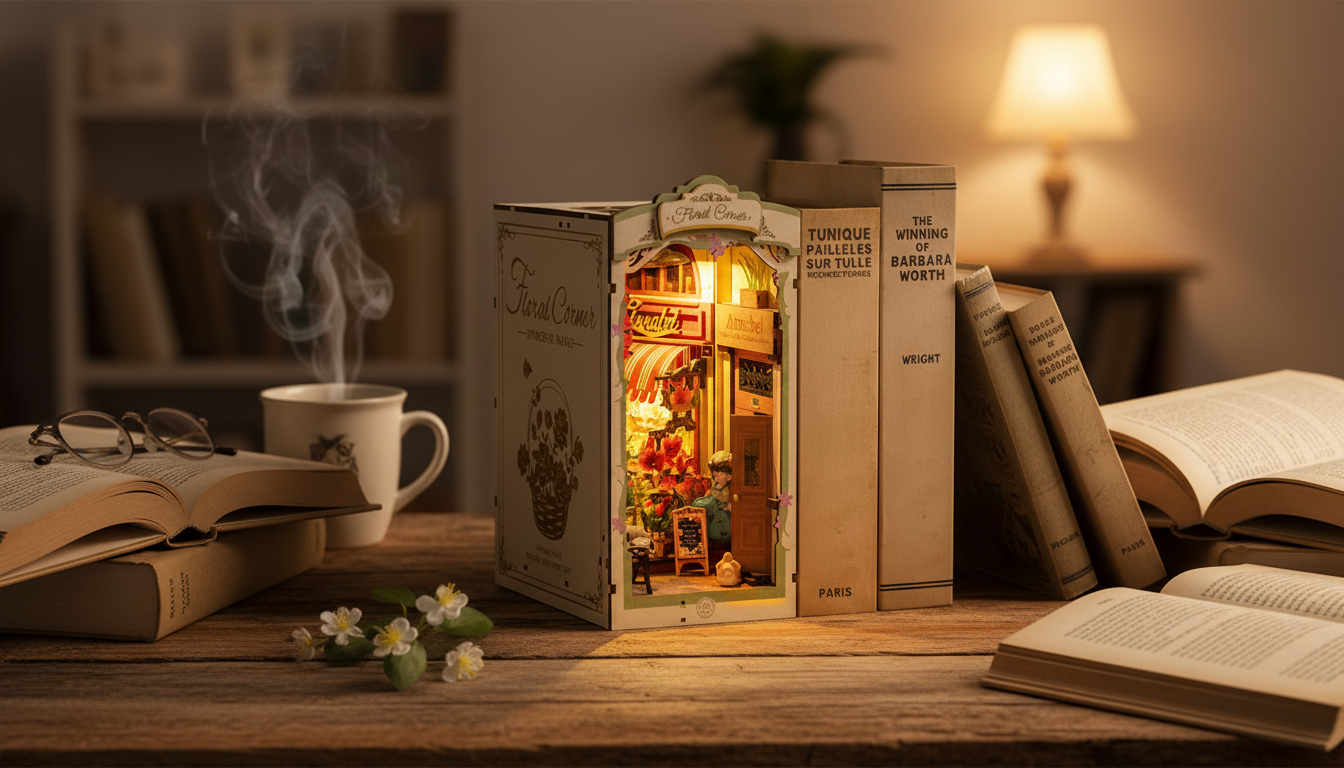
Turn an ordinary shelf gap into a miniature floral corner scene. The Floral Corner Book Nook 3D Wooden DIY Model is designed to sit between books like a tiny room, adding depth, detail, and a warm handcrafted feel to a reading nook, office shelf, or gift display. It’s the kind of decor that makes people lean in for a closer look—part mini diorama, part relaxing build, and part bookshelf “secret doorway” that upgrades the whole space without rearranging your library.
This piece is a decorative miniature “book nook” insert built from precision-cut wooden components. Once assembled, it stands upright between books, creating that satisfying peeking-diorama effect—like a little floral corridor tucked inside your shelves.
It also works as a standalone accent on a desk or side shelf, especially if you like rotating seasonal vignettes or creating small “moments” across a room.
Built from wood components intended for self-assembly, this book nook is primarily a display piece for bookshelves, desks, and reading corners. It tends to look best as a standout accent next to hardcovers or boxed sets—anything with enough height and presence to frame the scene.
| Detail | What to expect |
|---|---|
| Type | 3D wooden DIY model (book nook insert) |
| Theme | Floral corner scene |
| Primary use | Bookshelf decor, miniature display |
| Build style | Piece-by-piece assembly |
| Best placement | Between books or as a standalone shelf accent |
Wooden parts create a naturally warm, calming look that blends easily with most shelving styles—painted built-ins, modern white bookcases, or darker study shelves. The crafting experience is satisfying because the structure gradually becomes dimensional as layers stack and the scene gains depth.
Miniatures have a unique pull—part nostalgia, part craftsmanship, part storytelling. For a deeper look at why small-scale worlds stay so captivating, Smithsonian Magazine has explored the enduring appeal of miniatures (Smithsonian Magazine).
A great build starts before the first piece clicks into place. Setting up your space and pacing the steps helps the finished nook look crisp and square, rather than slightly skewed or glue-smudged.
If you’re new to preserving delicate paper-and-wood items, the Library of Congress offers practical care and handling basics that translate well to miniature displays (Library of Congress — Preservation Basics).
The magic of a book nook is how it transforms negative space into a focal point. A few styling choices can make the scene feel like it belongs in the shelf rather than simply sitting there.
For a coordinated shelf moment, consider pairing it with another statement decor piece like the Mother and Son Bear Statue Ornament—especially in a home library, reception area, or study where warm, meaningful accents make the space feel lived-in.
Once built, a book nook stays looking sharp with light, consistent care. The goal is to protect fine details while keeping the scene clean and bright.
If you’re ready to add a miniature garden corridor to your shelf, the Floral Corner Book Nook 3D Wooden DIY Model is an easy way to make your bookcase feel curated, dimensional, and personal.
It’s designed to be displayed between books to create the classic “peek-in” diorama effect. It can also be shown on its own on a shelf or desk, as long as it’s supported upright and kept stable.
Precision craft glue, tweezers, small clamps, and a hobby knife are commonly helpful, with optional fine-grit sandpaper for smoothing tight edges. A tidy, well-lit workspace and dry-fitting parts before gluing make the build noticeably smoother.
Use gentle dry dusting with a soft brush or a camera-lens blower rather than wet cleaning. Keep it away from moisture and prolonged direct sunlight, especially if you add paint or extra decorative elements.












Leave a comment