HomeBlogBlogHybrid vs Electric Cars: Quick, Clear Buying Guide

Hybrid vs Electric Cars: Quick, Clear Buying Guide

Hybrid vs Electric Cars: Quick, Clear Buying Guide

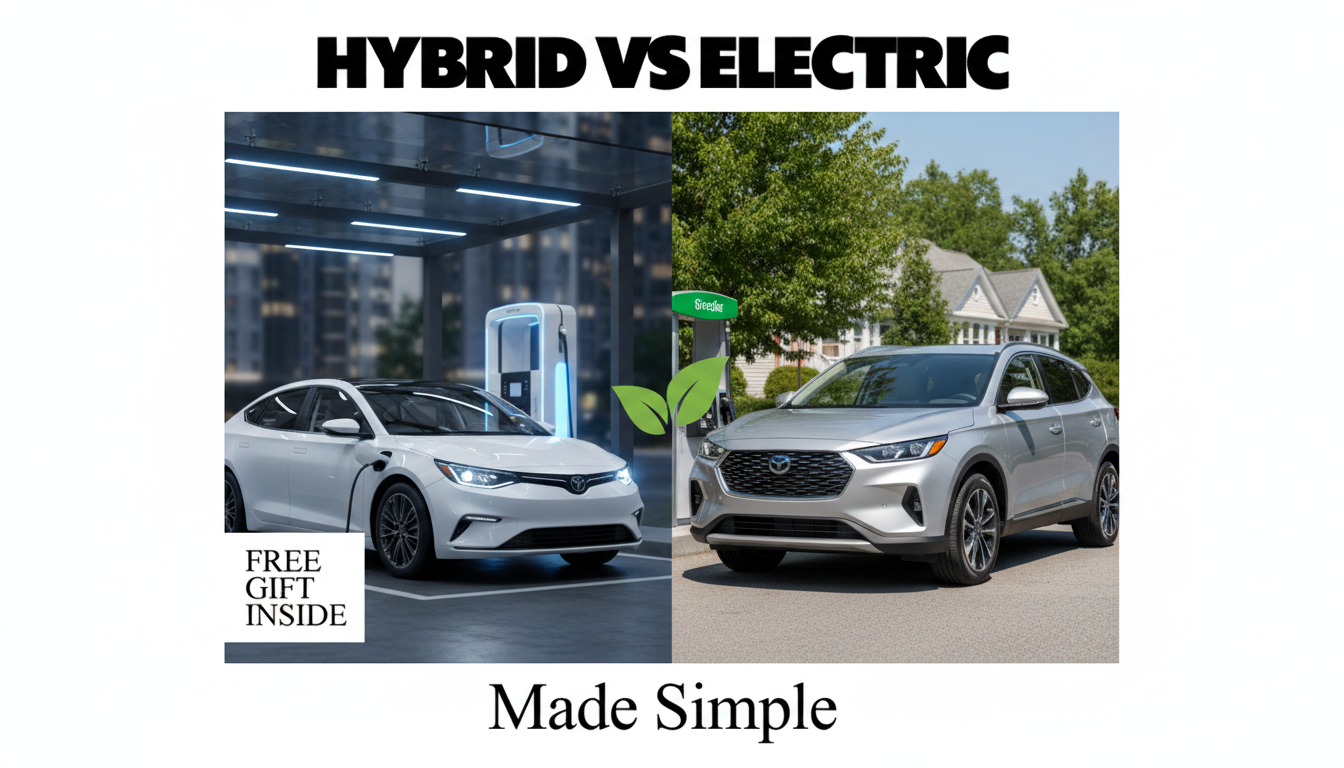
Hybrid vs. Electric, Made Simple

Choosing between a hybrid and an electric car comes down to how and where the vehicle will be used: daily mileage, access to charging, climate, and total cost expectations. The goal is to match the powertrain to real life—commutes, errands, weekend drives, and road trips—so the car feels easy to own long after the first few weeks.

Below is a straightforward breakdown of how hybrids, plug-in hybrids, and EVs work, what ownership looks like day to day, and how to pick confidently without getting buried in technical jargon.

Hybrid and Electric: What They Actually Are

These labels get tossed around, but the differences are clear once the basics are set.

  • Hybrid (HEV): A gasoline engine plus an electric motor and a small battery. The battery charges itself through driving and regenerative braking—no plugging in.
  • Plug-in hybrid (PHEV): A hybrid with a larger battery that can be charged from a plug. It can drive a limited distance on electricity, then switches to gasoline like a regular hybrid.
  • Electric vehicle (EV): Runs only on electricity stored in a large battery. It charges from home, work, or public chargers and does not use gasoline.

Key takeaway: Hybrids reduce fuel use without changing refueling habits. EVs can eliminate gas, but they work best when charging fits smoothly into your routine.

How Driving Feels Day to Day

The “feel” matters as much as the math, especially if this is a daily driver.

  • EVs feel quick and calm: Instant torque makes acceleration smooth and responsive, particularly at low speeds. They’re also quiet—no engine vibration at idle.
  • Hybrids feel familiar: Many drive like conventional cars, but the engine may turn on and off more noticeably. Some use a continuously variable transmission (CVT), which can sound different under hard acceleration.
  • Cold weather hits EV range more: Battery chemistry and cabin heating can reduce EV range in winter. Hybrids typically see smaller swings because gasoline can cover the gap.
  • City traffic is a sweet spot: Both hybrids and EVs benefit from regenerative braking in stop-and-go driving, recapturing energy that would otherwise become heat in the brakes.

Costs That Matter: Purchase Price, Fueling, and Maintenance

Sticker price is only one part of the ownership story. A better comparison includes incentives, how you’ll “fuel,” and how often you’ll service the car.

  • Upfront price: EVs often cost more initially, though federal, state, or local incentives may narrow the gap depending on eligibility.
  • Energy cost per mile: Home charging is often cheaper per mile than gasoline. Public fast charging can be closer to gasoline costs depending on local pricing and time-of-day rates.
  • Maintenance: EVs typically require less routine service (no oil changes, fewer moving parts). Hybrids still have engine-related service items, though brake wear can be reduced thanks to regenerative braking.
  • Tires and consumables: EVs can wear tires faster due to extra weight and strong torque. Driving style and tire choice make a big difference.
  • Battery reality: Both hybrids and EVs use batteries. EV batteries are larger and more expensive, but many are covered by long manufacturer warranties.

Typical ownership differences (varies by model and location)

Category Hybrid (HEV) Plug-in Hybrid (PHEV) Electric (EV)
Refuel/recharge Gas station Plug + gas station Plug only
Best for Mixed driving without charging access Short daily trips with occasional long drives Daily driving with reliable charging
Routine maintenance Oil + engine service items Oil + engine items (often less frequent if driven mostly electric) No oil; fewer engine-related services
Road-trip convenience High High (gas backup) Depends on charging network and route
Operating cost stability Gas price dependent More flexible (electric + gas) Electric price dependent; often stable when charging at home

Charging and Road Trips: Practical Reality

Charging doesn’t have to be complicated, but it does require a plan—especially if home charging isn’t available.

Helpful comparison tools for models, efficiency, and emissions are available from the U.S. Department of Energy, the U.S. Environmental Protection Agency, and Consumer Reports.

Which One Fits Different Lifestyles

A Simple Decision Checklist

A Quick Reference Guide for a Confident Choice

Recommended Guides and Tools (Digital Downloads)

FAQ

Is a hybrid better than an electric car for long road trips?

For frequent long trips, hybrids are usually the simplest because refueling is quick and widely available. EVs can road-trip well with reliable fast-charging along your route and a willingness to plan stops, while PHEVs offer flexibility by using electricity locally and gasoline on long legs.

How much does cold weather affect electric car range?

Cold weather can reduce range because batteries are less efficient at low temperatures and cabin heating uses energy. The impact varies by model, speed, tires, and how cold it is, but preheating while plugged in and using seat heaters can help.

What is the difference between a hybrid and a plug-in hybrid?

A standard hybrid (HEV) doesn’t plug in and charges its small battery through driving and braking. A plug-in hybrid (PHEV) can charge from a plug, drive a limited number of miles on electricity, and then operates like a hybrid using gasoline.

Was this article helpful?

Yes No
Leave a comment
Top

Shopping cart

×