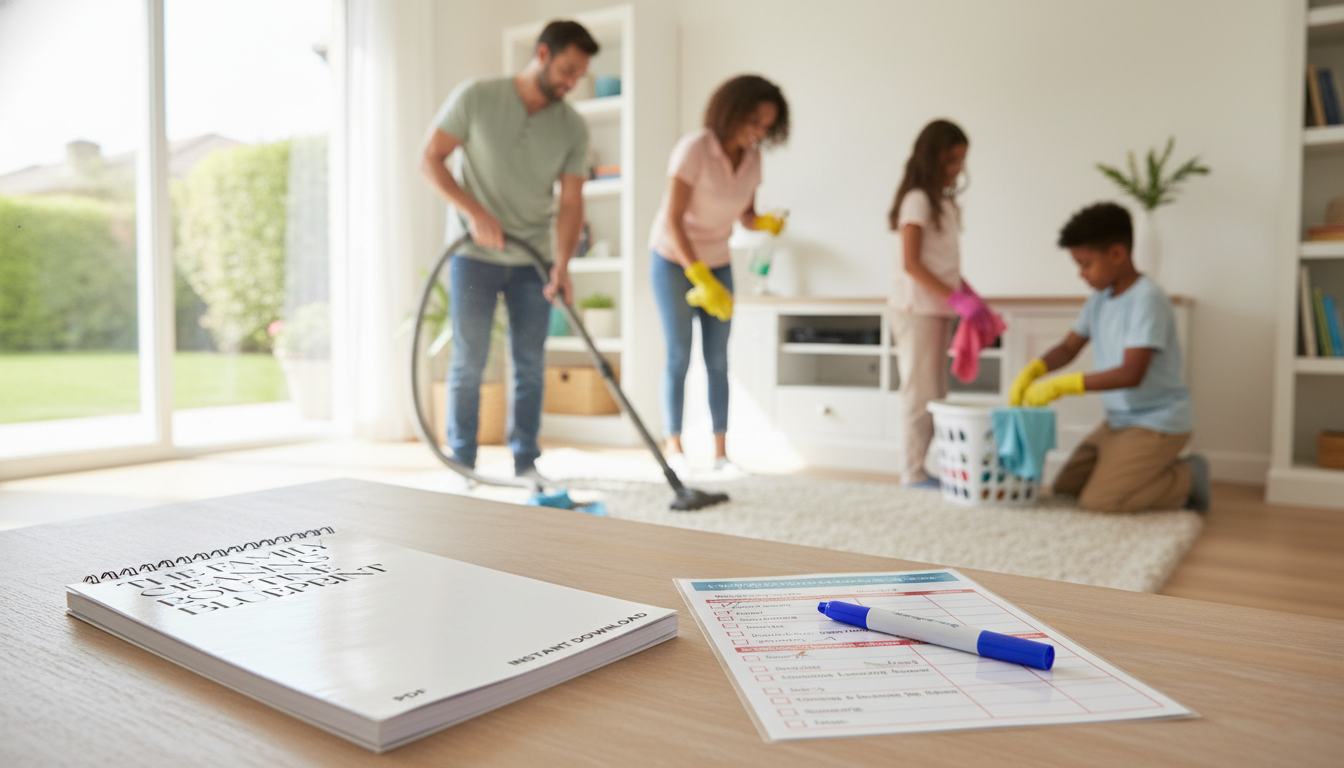
A reliable family cleaning routine reduces daily mess stress, prevents weekend cleaning marathons, and makes it easier for everyone to contribute. The goal isn’t a show-home level of “perfect”—it’s a calm baseline that survives busy school weeks, work deadlines, and the normal chaos of family life. With a few clear standards and a visible checklist, cleaning becomes a repeatable system instead of a constant negotiation. For more guidance, see My Ultimate Happy HOME Cleaning Routine Plus FREE Printable ….
The routines that last are the ones that feel obvious and doable—even on low-energy days. Focus on five essentials: For further reading, see Free Printable Cleaning Planner – A Pretty Life In The Suburbs.
Trying to “fix the whole house” in one go is the fastest route to burnout. Instead, stabilize the areas that create the most daily friction.
If you also want to reduce germs in high-touch areas, follow public-health guidance on cleaning and disinfecting, especially during cold/flu season. The CDC’s overview is a helpful reference: CDC — Cleaning and Disinfecting Your Facility.
Layering keeps the home functional without turning cleaning into a never-ending project. Think “light touch often” instead of “intense effort occasionally.”
| Frequency | Focus | Examples | Typical time |
|---|---|---|---|
| Daily | Keep things running | Dishes, counters, quick pickup, wipe sink, laundry move | 10–20 min |
| Weekly | Reset the home | Bathrooms, floors, bedding, dust, trash/recycling | 30–90 min |
| Monthly | Prevent buildup | Fridge shelf wipe, microwave deep clean, baseboards in one zone | 30–60 min |
| Seasonal | Big refresh | Closet purge, windows, pantry overhaul, donation drop-off | 1–3 hrs (split) |
Fair doesn’t always mean equal; it means everyone contributes in a way that fits their abilities and schedule. The simplest approach is to give each person ownership, not “helping when asked.”
For practical cleaning basics (especially if you’re training teens to clean effectively), this general guide is useful: American Cleaning Institute — Cleaning Basics.
If supplies are hard to access, tasks won’t happen—especially with kids. Make the “right choice” the easy choice.
For a ready-to-use system, The Family Cleaning Routine Blueprint printable checklist lays out daily/weekly/monthly layers and makes roles visible at a glance—especially helpful when you’re building consistency from scratch.
If your household also benefits from a clear “who does what and why” planning step, The Reality-Check Goal-Setting Checklist can help define realistic standards and timelines so the cleaning routine fits your actual capacity (not an idealized schedule).
Plan for about 10–20 minutes total, especially if you’re doing small resets throughout the day. A time cap keeps the routine consistent, and consistency matters more than perfection.
Use clearly defined, age-appropriate tasks and run short timed sprints (5–10 minutes) so the work has a clear end. Tying chores to routine anchors (before screens, after dinner) also makes expectations predictable.
Give each person 1–2 daily micro-tasks plus one weekly responsibility, then rotate weekly tasks so no one is stuck with the same job forever. During high-stress weeks, swap roles temporarily to protect the routine instead of letting it fall apart.











Leave a comment