
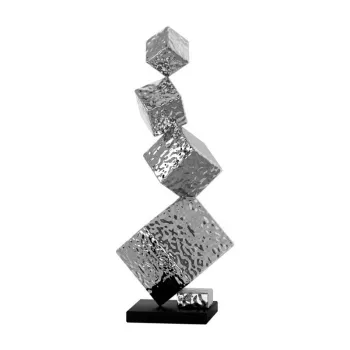
A geometric stainless steel sculpture brings crisp lines, reflective depth, and a gallery-like presence to interiors and outdoor settings. With its clean silhouette and light-catching surface, this style of decor can anchor a room, elevate an entryway, or add a modern focal point to a patio—especially when placement, scale, and lighting are chosen with intention.
Geometric metal sculpture has a way of reading as both art and structure. The shape does the heavy lifting, so the room can stay uncluttered while still feeling finished.
The difference between “placed” and “styled” usually comes down to breathing room. Stainless steel reflects what’s around it, so give it a clear backdrop and a few calm supporting elements.
| Location | Best Scale Match | What to Pair With | Lighting Tip |
|---|---|---|---|
| Console table / entryway | Medium | Neutral runner, single ceramic vase | Aim a warm spotlight from above for soft highlights |
| Sideboard / credenza | Medium to large | Books stacked horizontally, small bowl | Place near a lamp to create shifting reflections |
| Shelf / built-in niche | Small to medium | One framed print, minimal objects | Add LED strip lighting for crisp edges |
| Desk / office | Small | Matte desk mat, wood accessory | Avoid direct glare; use diffused task lighting |
| Covered outdoor area | Medium | Stone, concrete, matte planters | Keep out of direct midday sun to reduce harsh reflections |
Stainless steel looks most elevated when it’s balanced: pair shine with matte, and sharp geometry with a few grounded textures. Think of it as a “contrast tool” that can make nearby materials feel more intentional.
Reflections are the “extra layer” stainless steel brings to a room. Instead of treating it like a static object, treat it like a surface that interacts with color, movement, and light.
For additional stainless care guidance, see America’s Test Kitchen on cleaning stainless steel. For a straightforward overview of corrosion resistance and why stainless behaves differently than standard steel, the Nickel Institute’s stainless steel resource is a helpful reference.
Stainless steel stays sharp-looking with simple, consistent care. The goal is to avoid micro-scratches from gritty dust and to prevent water spots from lingering.
If the goal is a clean, modern statement that reads as art without feeling fussy, Modern Geometric Stainless Steel Sculpture is designed to deliver exactly that: a crisp geometric profile paired with a light-reactive stainless steel surface.
For home offices and studios where design choices overlap with productivity, these in-stock digital picks also pair nicely with a polished, modern workspace: How to Start a Blog for Passive Income: The Ultimate eBook Guide and The Reality-Check Goal-Setting Checklist.
Stainless steel is corrosion-resistant, but spotting or surface discoloration can occur when moisture, salt, or grime sits on it for long periods. Regular cleaning and drying—especially in humid rooms or covered outdoor areas—helps keep it looking pristine.
A practical rule is to keep one statement object from occupying much more than about one-third of the surface length unless it’s meant to be the main focal point. Balance height with nearby lamps or wall art, and leave negative space so the silhouette reads clearly from a few steps away.
Use a microfiber cloth first; if needed, add a little mild soap and water, then wipe in the direction of the finish and dry immediately. Avoid abrasive sponges and strong solvents that can dull the surface.












Leave a comment