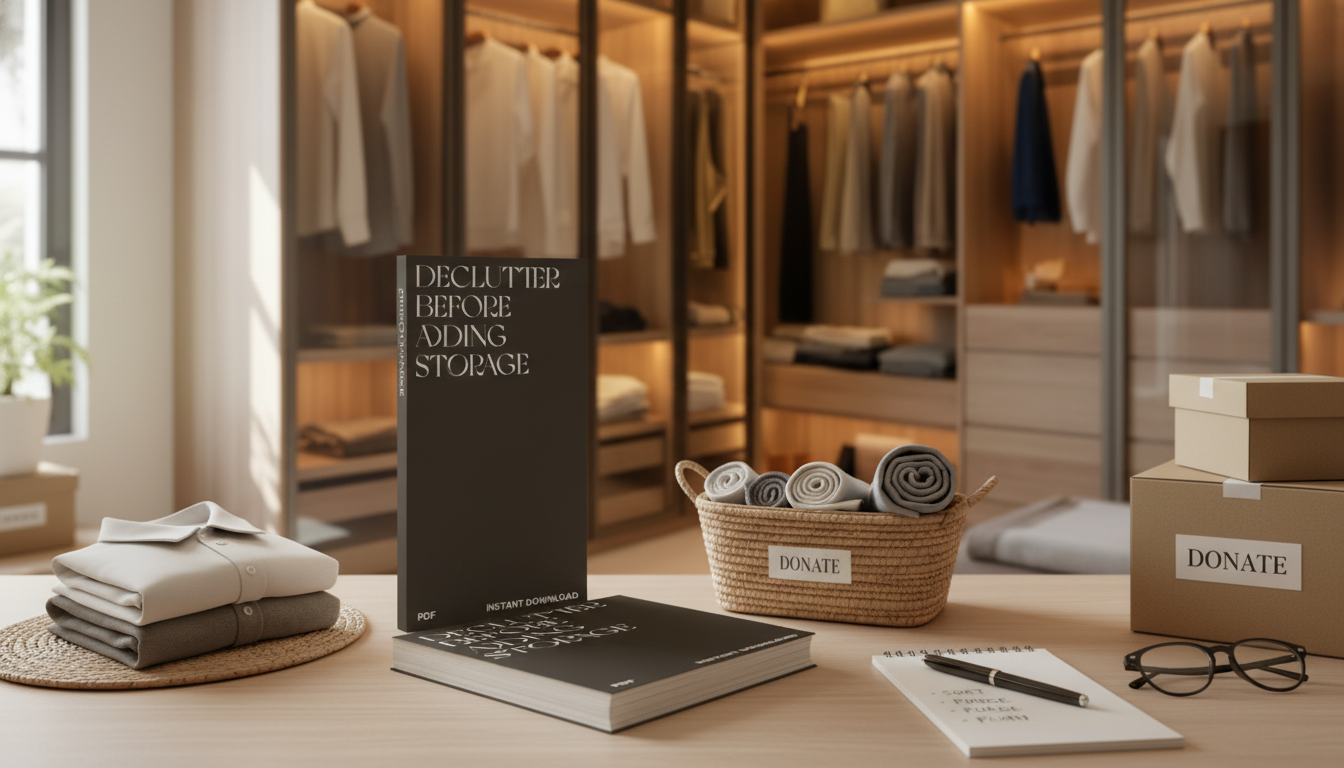
More bins and baskets can hide the problem, but they rarely solve it. A clutter-free home comes from reducing what doesn’t serve daily life, then choosing storage that fits what remains. This guide lays out a storage-last approach with clear decisions, fast room-by-room wins, and simple rules for buying organizers only after the space is truly ready.
Buying storage before editing what you own feels productive—until it quietly locks clutter into place. The result is often a home that looks “sorted,” but still feels crowded.
Clutter also has a real impact on stress and mental load. If you’re looking for credible guidance on stress and coping tools, the American Psychological Association’s stress resources are a helpful starting point.
This routine works for a single drawer or an entire home. The key is repeating the same sequence so you don’t re-create clutter with “better containers.”
If you want a structured, printable approach you can reuse from room to room, the Declutter Before Adding Storage eBook guide is designed around this storage-last flow so buying organizers becomes the final, simplest step.
| If the item is… | Do this | Where it goes next |
|---|---|---|
| Used weekly or essential | Keep | Store at point-of-use; prioritize easy access |
| Used seasonally | Keep (seasonal) | Higher shelves, labeled bins, or under-bed storage (after measuring) |
| Duplicated without a clear need | Reduce extras | Donate, sell, or recycle depending on condition |
| Broken, expired, missing parts | Remove | Trash or recycle; schedule hazardous disposal if needed |
| Sentimental but rarely revisited | Curate | One memory box per person; photograph bulky items if appropriate |
When you’re deciding what leaves, it helps to follow a simple disposal hierarchy. The U.S. Environmental Protection Agency’s Reduce, Reuse, Recycle guidance is a practical reference for donating, recycling, and cutting waste.
If a space is physically demanding to tackle, make the session comfortable so you can finish. A dedicated “declutter uniform” can remove friction—something as simple as the Women’s High-Waist Leggings & Sports Bra 2/3-Piece Workout Set can be a practical option for move-around tasks like hauling donations or wiping shelves.
Professional organizing standards can be helpful when you’re setting up systems that need to last. The National Association of Productivity & Organizing Professionals (NAPO) is a well-known industry resource for organizing education and best practices.
And don’t forget overlooked clutter zones like the garage or car trunk. If you’re cleaning up scuffs and restoring surfaces as part of a reset, the Car Plastic & Leather Restorer – Back to Black Gloss Coating & Polish can support a satisfying “finish line” moment after you’ve cleared the junk.
After decluttering, adding intentional decor can feel better than adding more “stuff.” If you’re replacing random knickknacks with one meaningful statement piece, the Mother and Son Bear Statue Ornament is an example of choosing a single curated item rather than many small fillers.
Decluttering comes first because you can’t choose the right organizing system until you know what you’re keeping and how much space it truly requires. Organizing works best when categories are edited down and storage is selected to fit real inventory, not guesses.
Small micro-zones can take 10–20 minutes, while a typical room often takes 1–3 hours depending on how many categories are involved. Household size, decision fatigue, and how often you stop to put items away all affect timing; daily 15-minute sprints plus a weekly reset is a sustainable cadence for most homes.
Start with your personal zones first, then set clear boundaries in shared spaces (one shelf, one drawer, one bin per category). Agree on container limits so the space, not debates, determines how much is kept, and focus on functional wins like clear counters and easier routines.












Leave a comment