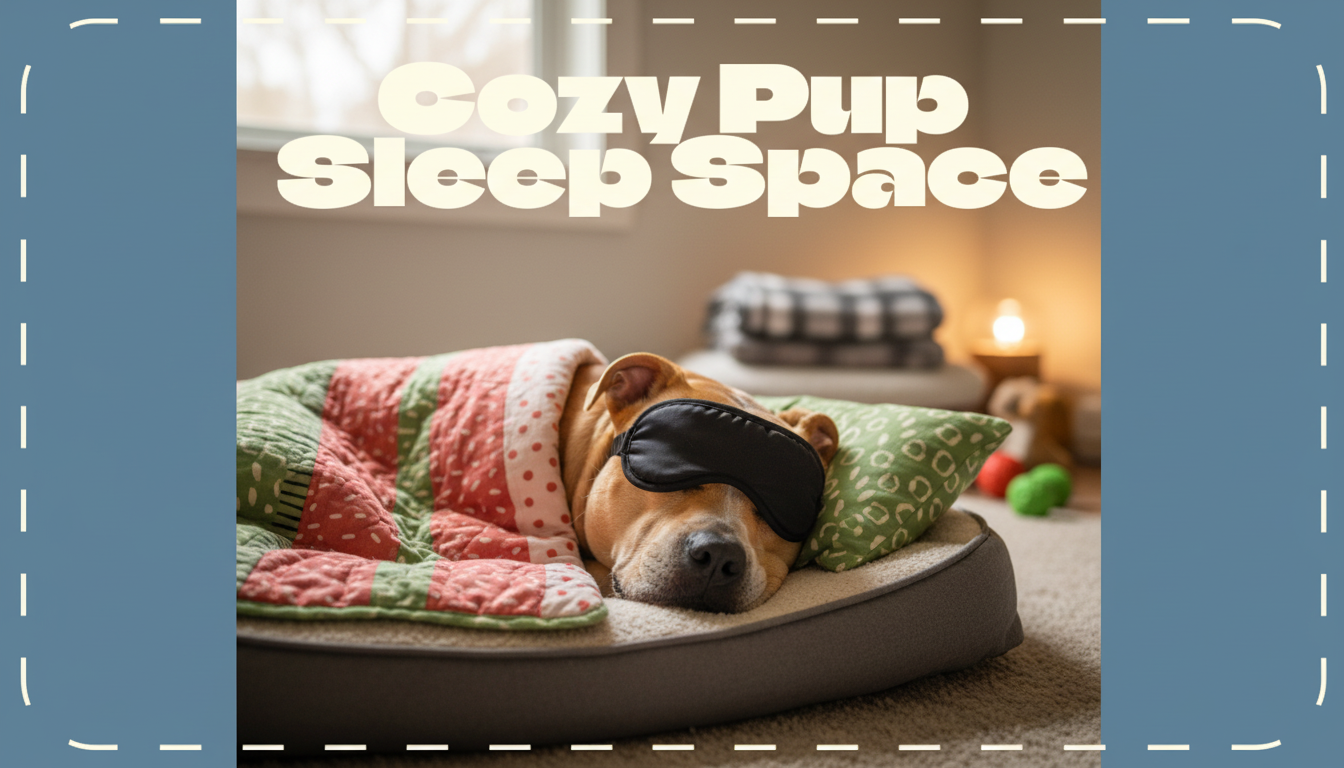
A dog’s sleep area can either lower stress or quietly amplify it. A few small changes—placement, comfort, sound, light, and routine—often make rest easier for anxious dogs, brand-new puppies, and older dogs with changing bodies. This guide walks through a practical setup using a printable checklist so the space stays consistent day to day.
A well-planned sleep zone is more than “a bed in the corner.” It’s a predictable, low-pressure spot that tells your dog, “Nothing is expected of you right now.” That message matters most for puppies learning how to settle and for seniors whose sleep may be lighter or disrupted.
General guidance on keeping pets comfortable and healthy can be found through the American Veterinary Medical Association (AVMA), and behavior-focused resources are available via AAHA.
Location does a lot of the heavy lifting. If the bed is placed where the dog is repeatedly interrupted, startled, or overheated, even the comfiest setup can turn into a “can’t fully relax” zone.
| Checklist item | Good sign | Fix if needed |
|---|---|---|
| Foot traffic | Dog stays lying down when people pass | Move bed behind a sofa, into a corner, or to a calmer room |
| Temperature | No shivering, panting, or frequent repositioning | Add a blanket, cooling mat, or adjust vent access |
| Noise level | Dog settles within 5–10 minutes | Use a fan/white noise, close curtains, or choose a quieter wall |
| Lighting | Dog naps without scanning or startling | Dim lighting, close blinds, or add a covered crate option |
Comfort is part softness, part support, and part “nothing weird happens here.” That last piece is why safety details—traction, chewing risk, and a clutter-free perimeter—matter so much for puppies and nervous dogs.
For dogs that panic when left alone, separation anxiety guidance from the American Kennel Club (AKC) can help you recognize patterns and plan next steps.
If you want a quick way to standardize the setup (especially in busy households), a printable guide can help everyone follow the same steps. The Cozy Pup Sleep Space – Printable Dog Sleep Area Checklist (Digital Download) is designed to reduce guesswork while you troubleshoot what helps your puppy or senior dog rest more comfortably.
| Component | What it helps with |
|---|---|
| Sleep area checklist | Consistency across days; faster troubleshooting when something changes |
| Cozy bed setup guidance | Comfort, support, and safety upgrades for different ages and sizes |
| Calming environment prompts | Noise/light/location adjustments that can reduce arousal at bedtime |
Best for: new dog owners, recent adopters, multi-dog homes, and anyone trying to pinpoint why nighttime rest suddenly got harder. If you’re creating a calmer evening routine for yourself while you work on your dog’s, a comfy change of gear can help too—consider the Women’s High-Waist Leggings & Sports Bra 2/3-Piece Workout Set for relaxed, easy movement during late potty breaks and early mornings.
Many dogs settle better near their people, especially puppies, recent adoptees, and dogs that get anxious when separated. Starting the bed in the bedroom (or nearby) can help build calm sleep habits, and you can gradually transition the location later if that fits your routine.
A supportive, pressure-relieving bed with an easy step-in height and a non-slip base can make it easier for seniors to get comfortable and change positions. If frequent waking continues, it’s worth discussing possible pain or mobility issues with a veterinarian.
Many dogs show improvement within a few days, but a full adjustment can take a couple of weeks—sometimes longer if triggers are intense or routines change often. Keep the setup consistent, reward calm settling, and track what changes on restless nights so you can adjust one variable at a time.












Leave a comment