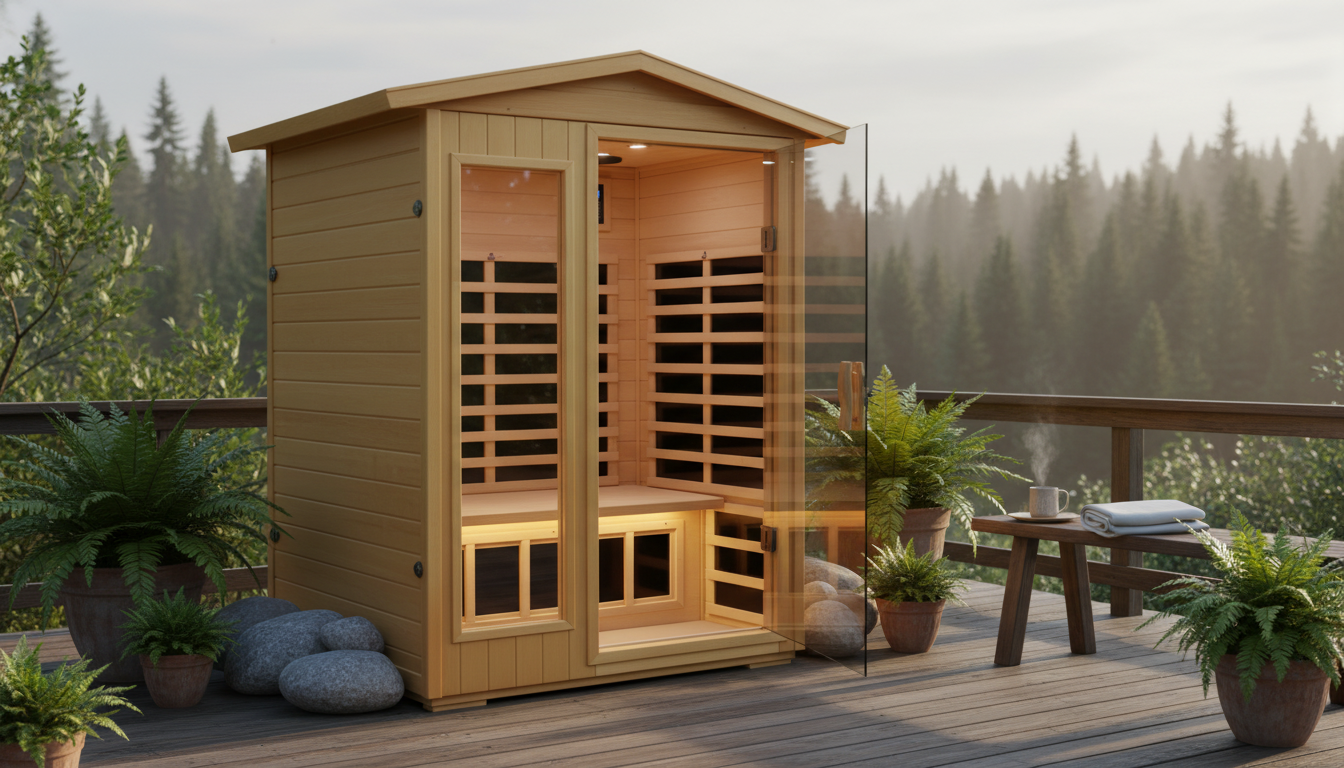
An outdoor infrared sauna can turn a patio or backyard into a dedicated recovery and relaxation zone—without the intense steam and high ambient heat of traditional sauna rooms. This 2-person model pairs naturally aromatic basswood with low-EMF heating panels to support comfortable, consistent sessions for two, while keeping the footprint practical for most outdoor spaces.
For shoppers comparing backyard wellness upgrades, the Outdoor 2-Person Far Infrared Sauna with Basswood Wood and Low EMF Heating Panels is built around a simple goal: make it easier to show up for regular heat sessions—before work, after training, or as a wind-down ritual at night.
Basswood is a popular interior wood choice for infrared saunas because it tends to feel smooth against the skin and stays comfortable to the touch as the cabin warms. Its lighter color and relatively uniform grain also create a bright, calm look—especially in outdoor settings where natural light may filter in from nearby windows or a glass door.
For day-to-day use, the biggest “secret” is consistency: towel down the bench, wipe the surfaces after, and let the cabin air out. Those small habits do more to keep the interior fresh than aggressive cleaners ever could.
Far infrared heating panels create radiant warmth that many users find easier to tolerate than very high-temperature traditional sauna air. Instead of chasing extreme heat, routines often feel more like a steady, comfortable build—helpful for people who want to relax, stretch, or practice quiet breathwork while they warm up.
If you’re new to infrared, it can help to learn the basics of infrared devices and safe use guidance from authoritative sources like the FDA’s information on infrared lamps and general sauna safety considerations from the Mayo Clinic.
One practical tip: place a small outdoor side table nearby for water and a timer. If you want a simple way to “complete” the space visually, a small decor piece can make the setup feel intentional—something like the Mother and Son Bear Statue Ornament works well on a shelf or side table near a covered entry.
For a post-sauna cool-down routine, comfortable stretch-friendly clothing can help you keep the ritual going without overthinking it. If you prefer dedicated recovery apparel, consider the Women’s High-Waist Leggings & Sports Bra 2/3-Piece Workout Set for gentle movement, hydration, and a relaxed reset after heat sessions.
| Feature | What it means for daily use |
|---|---|
| Capacity | Designed for two adults; can be used solo with extra space and flexibility |
| Heating type | Far infrared panels for radiant warmth and comfortable session pacing |
| EMF approach | Low-EMF heating panels intended to reduce electromagnetic field exposure |
| Wood | Basswood interior for a smooth touch, clean look, and straightforward wipe-down |
| Placement | Outdoor-friendly with best results on a level base and with weather protection |
| Routine fit | Supports consistent, moderate-heat sessions with hydration and ventilation steps |
For additional general wellness guidance around heat therapy and related topics, the NIH’s NCCIH is a helpful starting point.
Many beginners start with 10–20 minutes at a moderate temperature and increase gradually as comfort improves. Drink water before and after, and end the session right away if you feel lightheaded or unwell.
EMF refers to electromagnetic fields produced by electrical components. “Low EMF” indicates the sauna is designed to limit those fields near the heating system, but the level depends on how and where it’s measured and how close you sit to the panels.
Yes, with the right base, outdoor-safe electrical setup, and weather protection such as overhead cover or a fitted exterior cover. In cold weather, plan for extra warm-up time and do routine checks after storms.












Leave a comment