
A hanging hammock swing chair adds a relaxed, cocoon-like seat to patios, balconies, bedrooms, or reading nooks. Choosing the right hanging point, hardware, and fabric helps ensure a comfortable sit and a secure, quiet swing that fits the space and lifestyle.
A hanging hammock swing chair blends the gentle motion of a swing with the wraparound comfort of a hammock-style seat. Most designs hang from a single overhead point—like a ceiling beam, joist, freestanding stand, or sturdy tree limb—so the chair can sway forward/back and often rotate if a swivel is used.
The feel is more “cradled lounge” than “playground swing.” It’s ideal for reading, relaxed rocking, and taking weight off your feet, but it’s not meant for aggressive swinging, standing, or sudden side-to-side motion. Comfort comes down to a few practical details: the seat width (room for shoulders and elbows), back height (support for longer sits), whether a spreader bar is included (more open posture), and installation height (too high feels unstable; too low can scrape the floor).
Placement determines how the chair behaves day-to-day—how quiet it is, how clean it stays, and how confident it feels to get in and out.
| Placement | Minimum clearance to plan | Notes |
|---|---|---|
| Ceiling corner (indoor) | Front/back sway space + side elbow room | Add a rug or mat to reduce scuffs and dampen sound |
| Porch ceiling | Clear path from railings and steps | Choose corrosion-resistant hardware; consider wind |
| Balcony | Chair width + knee clearance | A stand can avoid drilling; check weight rating |
| Tree branch | Enough room to avoid trunk contact | Use wide straps; inspect branch condition regularly |
Small design differences can change how the chair supports your body over longer sessions.
Where the chair lives—inside, under cover, or exposed—should guide your fabric and hardware choices.
A swing chair is only as strong as its mounting point and connectors. For general home safety guidance, the U.S. Consumer Product Safety Commission offers resources worth reviewing at cpsc.gov.
If installing from a tree, choose a healthy limb and avoid damaging bark. For general tree-care guidance, see the USDA Forest Service information at fs.usda.gov.
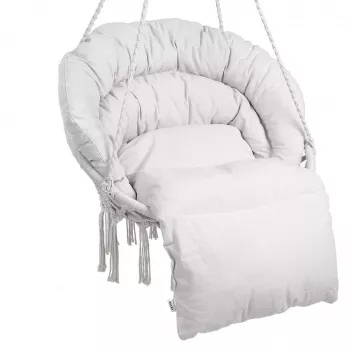
For a simple way to add a cozy, suspended seat indoors or outdoors, consider the Hanging Hammock Swing Chair. Plan the install first (anchor point, clearance, and hardware), then match the setup to how it will be used—reading, lounging, or occasional naps.
To finish the space with a warm, homey touch, a small accent can help the area feel intentional—like the Mother and Son Bear Statue Ornament on a nearby shelf or side table.
Yes, as long as the mount is secured into a solid joist or beam using rated hardware. Avoid drywall anchors for suspended seating, and make sure the chair, mount, and connectors all meet an appropriate load rating.
A common target is a seated height where your feet can touch the floor lightly for balance. Adjust slightly based on comfort, safer entry/exit, and enough clearance for a gentle sway without scraping.
A swivel isn’t required, but it can prevent ropes from twisting and can make motion feel smoother. If you add one, choose a swivel with a load rating that matches or exceeds the rest of the setup.












Leave a comment