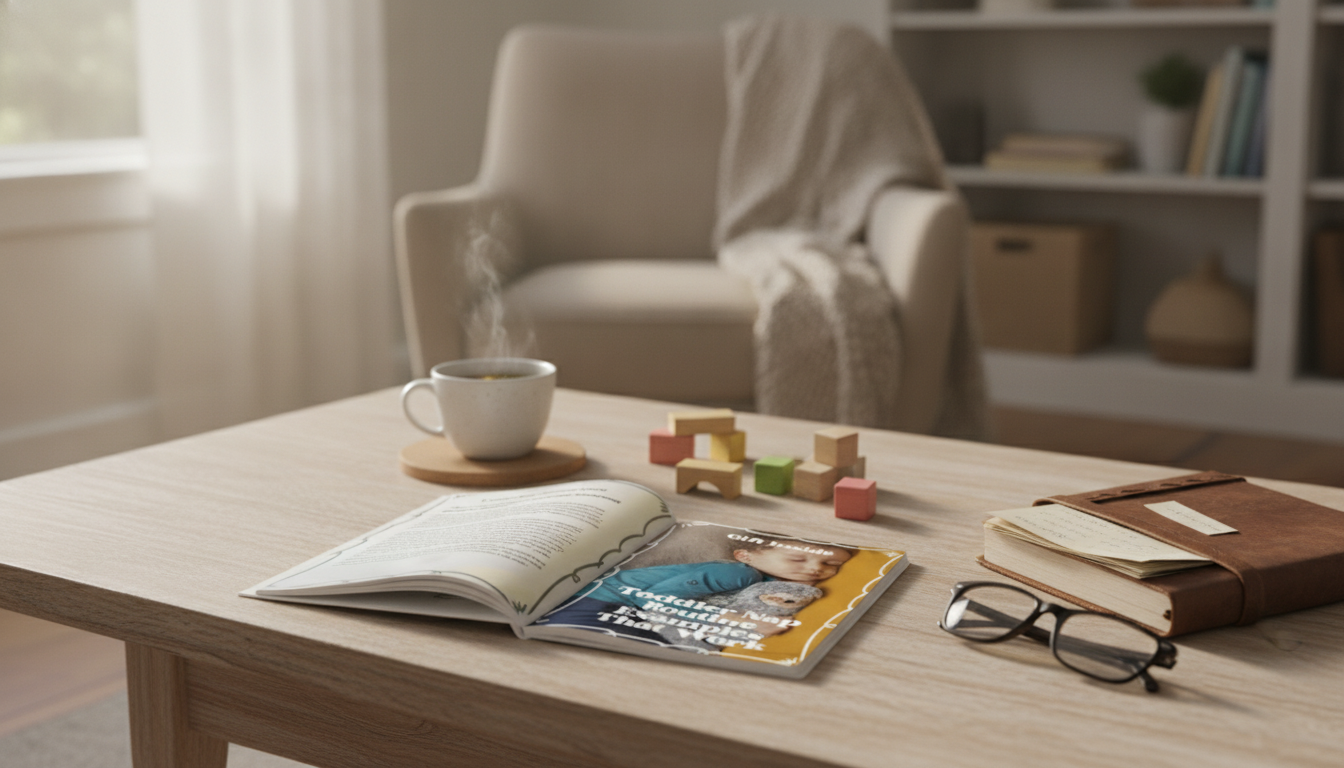
A toddler nap routine doesn’t need to be long to be effective—it needs to be repeatable. The biggest wins come from consistency over perfection: doing the same few steps in the same order (even if timing shifts) helps your toddler’s body and brain recognize, “Rest is next.”
The most reliable routines also create a clear transition from “play mode” to “rest mode.” That transition lowers power struggles because the day stops feeling negotiable and starts feeling predictable. Keep the cues short and obvious: dim the room, turn on white noise, say the same simple phrase, and move straight into the crib/bed.
Timing matters, too. If you start too early, sleep pressure may not be strong enough and you’ll get chatting, rolling, and curtain-peeking. If you start too late, overtiredness can look like wild energy, extra stalling, or big feelings. The goal is a calm runway into sleep, not a perfect clock time.
Finally, set one calm boundary you can keep: nap time is quiet time, even if sleep doesn’t happen. That single expectation protects the afternoon from becoming a daily debate.
Some toddlers give subtle cues; others go from fine to frantic in five minutes. Look for a cluster of signals rather than one yawn.
If you’ve missed the window, don’t add steps to “force calm.” Shorten the routine, reduce stimulation (lower lights, quiet voices), and plan an earlier bedtime that night.
Pick one routine that fits your real day and repeat it for a week before judging results. Switching routines daily teaches toddlers to test what changes.
Potty/diaper → water sip → close curtains → 1 short book → same sleepy phrase → into bed.
Lunch cleanup → potty/diaper + hand wash → quiet play (puzzles) → two books → cuddles + song → lights off.
5 minutes outdoors after lunch → come in, wash hands/face → change into sleep clothes → book → bed.
Snack at pickup → car quiet (music low) → home potty/diaper → short book → nap.
Set a special quiet basket for the other child → start the toddler routine at the same time daily → use white noise to mask household sounds.
| Time | Routine steps | Best for |
|---|---|---|
| 10 minutes | Potty/diaper → water → curtains → 1 short book → phrase → bed | Days with appointments, late lunches, or travel |
| 15 minutes | Cleanup → potty/diaper → 5 min quiet play → 1–2 books → bed | Toddlers who need a brief buffer |
| 20 minutes | Cleanup → wash → sleep clothes → 2 books → cuddles/song → bed | Toddlers who stall without enough connection |
| 25 minutes | Snack → potty/diaper → bath/wipe-down → books → bed | Messy days, sensory kids who settle with warm water |
If you want a one-and-done reference you can stick on the fridge, the digital guide Toddler Nap Routine Examples That Work – Easy, Practical Toddler Nap Routine Examples Guide for Parents bundles routines, timing ranges, and troubleshooting in one place.
Most toddlers do best when nap timing is guided by wake time and sleep pressure rather than a strict clock. These ranges are a starting point—then adjust in small increments (15 minutes) for a few days at a time.
For broader sleep needs by age, see guidance from the CDC and sleep habit tips from the American Academy of Pediatrics.
If tracking routines helps you stay consistent without overthinking, a simple printable like The Reality-Check Goal-Setting Checklist – Printable Goal Setting Checklist can be repurposed as a quick “did we do the steps?” habit check (no detailed logging required).
A nap often works best when it starts about 3.5–5 hours after wake-up for 12–18 months, about 5–6 hours for 18–24 months, and about 5.5–6.5 hours for ages 2–3. Watch sleepy cues and adjust by 15 minutes for several days to find the sweet spot.
Many toddlers nap about 1–2 hours, though some do well with up to 2.5 hours when nights are solid. If bedtime keeps drifting later, consider capping the nap to 60–90 minutes or ending by a set time.
Keep the same routine but switch the expectation to quiet time: a calm 45–60 minutes in the room with safe comfort items. Offer simple choices, hold a steady boundary, and use an earlier bedtime on skipped-nap days.













Leave a comment